Two Kinds of Fat, Two Very Different Jobs
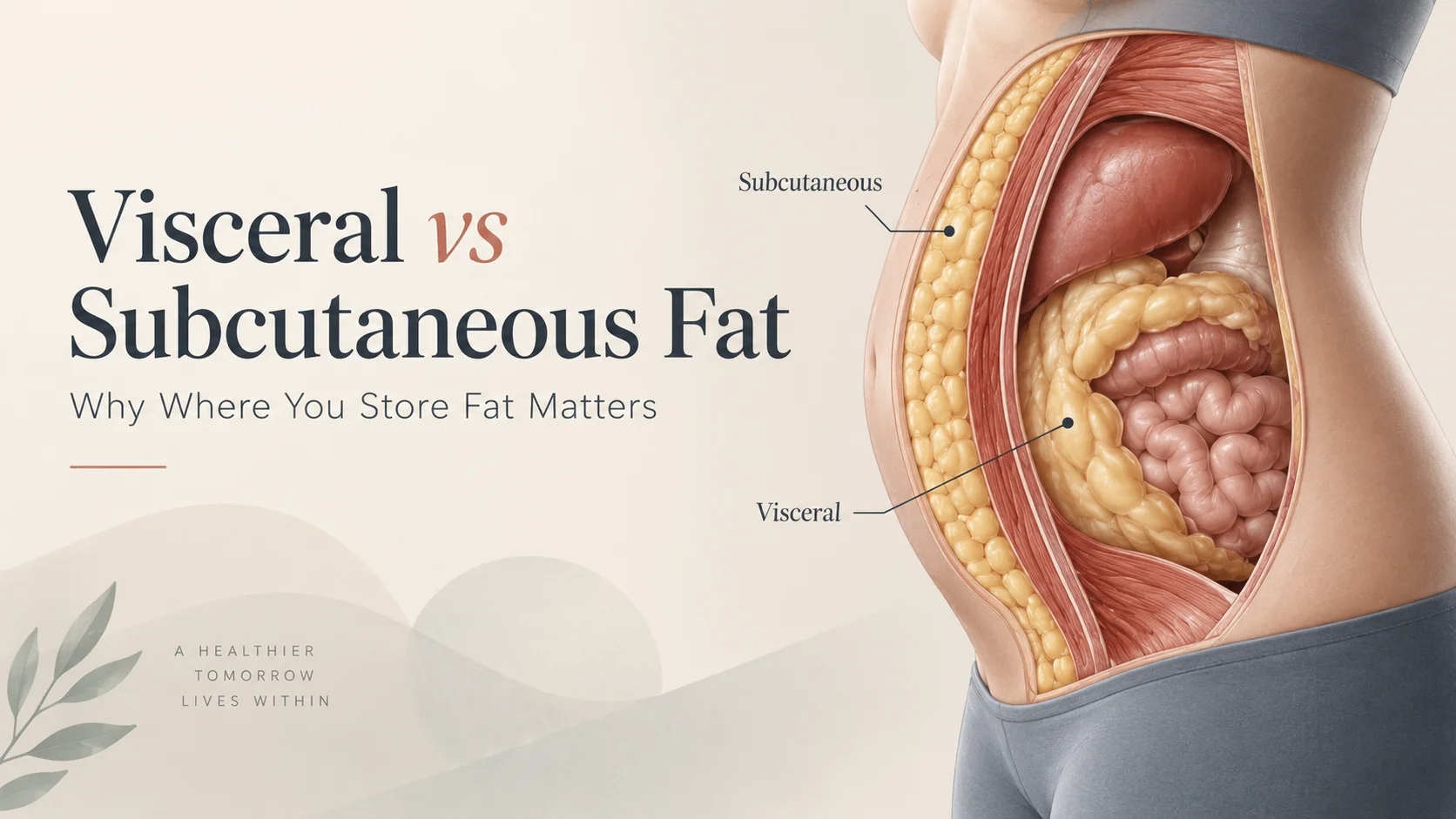
When people talk about "body fat" they usually mean the soft layer they can pinch. That's subcutaneous fat, and it's the majority of the fat most people carry. It sits directly under the skin across the body, on the hips, thighs, arms, back and belly.
The other kind is harder to see and matters more. Visceral fat sits deep inside the abdominal cavity, packed around the liver, intestines, pancreas and kidneys. You can't pinch it. It's what gives the firm, rounded "beer belly" its shape, and it accounts for roughly 10% of total body fat in most adults, more in some.
The two kinds are made of the same cells, but they behave like different organs. Subcutaneous fat is a relatively stable energy store. Visceral fat is metabolically active in ways that directly affect your risk of disease, and understanding that difference changes how you should think about your waistline.
Why Visceral Fat Is the Dangerous One
It drains straight into the liver
Visceral fat has a plumbing problem. Its blood supply drains through the portal vein directly into the liver. When visceral fat cells release fatty acids, which they do readily, especially under stress, those fatty acids hit the liver first and in high concentration. The liver responds by producing more glucose and more triglyceride-rich lipoproteins, and by becoming less sensitive to insulin.
Subcutaneous fat drains into the general circulation, where its fatty acids are diluted and distributed. Same molecules, very different first destination.
It's inflammatory
Visceral fat produces higher levels of inflammatory signalling molecules, including interleukin-6 and tumour necrosis factor alpha, and lower levels of adiponectin, a hormone that improves insulin sensitivity. Chronic low-grade inflammation is a common thread running through type 2 diabetes, cardiovascular disease and several cancers.
The data
The Framingham Heart Study measured both fat types with CT scans in more than 3,000 people (Fox et al., 2007, Circulation). Both were associated with metabolic risk factors, but visceral fat showed a consistently stronger relationship with high blood pressure, abnormal cholesterol, elevated blood sugar and metabolic syndrome, even after adjusting for BMI and waist circumference.
Large studies have found that waist circumference, the simplest proxy for visceral fat, predicts mortality independently of BMI. Two people with the same BMI but different waists carry different risk, and the one with the larger waist is worse off. This is a central reason BMI alone can be misleading, which we discuss in BMI calculator explained.
"Skinny fat" is a visceral fat problem
Some people with a normal BMI, and even a modest total body fat, carry a disproportionate amount of it as visceral fat. The pattern is more common in people of South Asian and East Asian descent, in older adults, and in people who are sedentary with low muscle mass. It's also why "thin" people can develop type 2 diabetes and fatty liver disease. Total fat looked fine; distribution didn't.
Subcutaneous Fat: Mostly Harmless, Sometimes Protective
Subcutaneous fat, particularly on the hips and thighs, isn't just neutral. Several studies suggest it may be mildly protective. Lower-body fat appears to act as a "metabolic sink," safely storing excess energy that would otherwise end up in the liver, muscles and visceral depots. Women's naturally higher hip and thigh fat is part of why women tend to have lower cardiovascular risk than men at the same BMI, at least before menopause.
Abdominal subcutaneous fat is somewhere in between. It's less harmful than visceral fat but more strongly linked to risk than fat on the limbs.
The practical point: not all fat loss is equally valuable. Losing a centimetre from your waist matters more for health than losing one from your thigh.
How to Tell Which Kind You Have
The direct methods
CT and MRI scans measure visceral fat area precisely and are the research gold standard, but they're expensive and, for CT, involve radiation. DEXA scans, increasingly available in clinics and some gyms, produce a visceral fat estimate that correlates well with CT. Some bioelectrical impedance devices report a "visceral fat level," but consumer versions are rough estimates with large error margins.
Waist circumference
The cheapest useful measure. Measure at the level of the navel, standing, relaxed, at the end of a normal exhale, tape snug but not compressing.
| Increased risk | Substantially increased risk | |
|---|---|---|
| Men | 94 cm and above | 102 cm and above |
| Women | 80 cm and above | 88 cm and above |
Lower thresholds, commonly 90 cm for men and 80 cm for women, are recommended for people of Asian descent. A 2020 consensus statement from the International Atherosclerosis Society and the International Chair on Cardiometabolic Risk (Ross et al., Nature Reviews Endocrinology) argued that waist circumference should be measured routinely alongside BMI in clinical practice, precisely because it captures the risk BMI misses.
Waist-to-height ratio
Divide your waist by your height in the same units. Below 0.5 is generally low risk; 0.5 to 0.6 is elevated; above 0.6 is high. This adjusts for frame size and works across sexes and ethnic groups better than waist circumference alone.
The pinch test
Not scientific, but instructive. If you can grab a thick fold of fat on your belly, that portion is subcutaneous. If your belly is large but firm and hard to pinch, the volume is largely visceral, pushing the abdominal wall outward from inside.
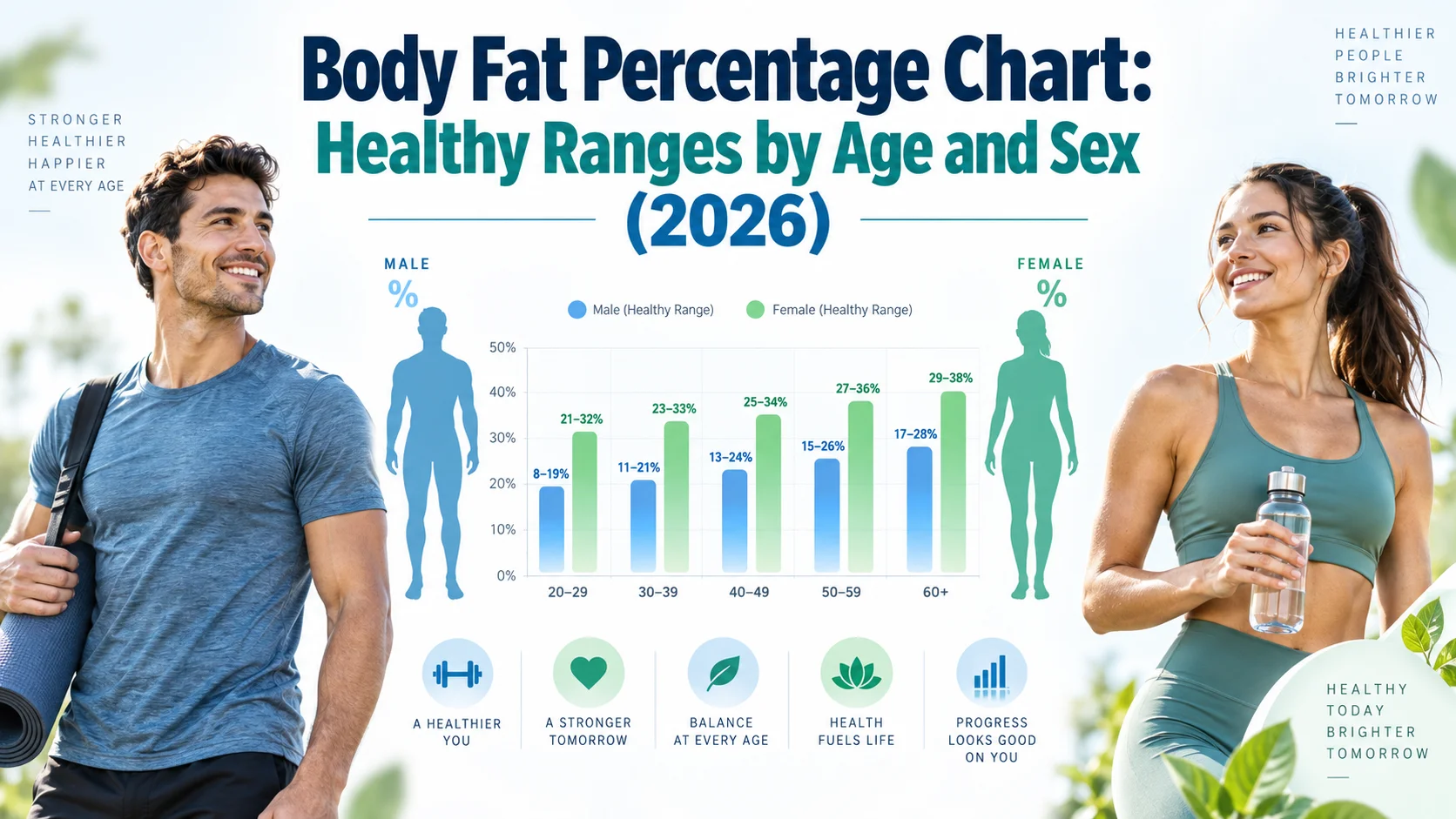
For the full picture of how visceral fat fits into your overall body composition, see our body fat percentage chart.
What Causes Visceral Fat to Accumulate
Calorie surplus, first. Any sustained surplus adds fat somewhere. Where it goes is partly genetic: some people preferentially store in the visceral depot from the start.
Age and sex hormones. Visceral fat increases with age in both sexes. In women, the drop in estrogen at menopause shifts fat storage from the hips toward the abdomen. In men, declining testosterone has a similar effect.
Chronic stress. Cortisol promotes visceral fat storage specifically. Visceral fat cells have more cortisol receptors than subcutaneous cells, which is one reason chronically stressed and sleep-deprived people tend to gain around the middle.
Alcohol. The "beer belly" has a basis. Alcohol calories are preferentially associated with abdominal fat in several studies, and heavy drinking is strongly linked to visceral fat and fatty liver.
Fructose and sugar-sweetened drinks. A controlled trial (Stanhope et al., 2009, Journal of Clinical Investigation) found that people consuming fructose-sweetened drinks for ten weeks gained significantly more visceral fat than those consuming glucose-sweetened drinks with identical calories. Sugar-sweetened beverages are consistently linked to abdominal fat in observational research.
Inactivity. Sedentary time is associated with visceral fat independently of total weight. Muscle is the main consumer of fatty acids and glucose; less muscle activity means more of both end up stored.
Poor sleep. Short sleep raises cortisol, increases hunger, and is associated with greater abdominal fat gain over time.
How to Reduce Visceral Fat
The good news: visceral fat is usually the first fat to go. Because it's metabolically active and well supplied with blood, it responds to a calorie deficit and to exercise faster than subcutaneous fat. People often notice their waist shrinking before the scale or the mirror shows much else.
Exercise, even without weight loss
A meta-analysis in Obesity Reviews (Verheggen et al., 2016) compared exercise with diet for reducing visceral fat and found that exercise reduced visceral fat significantly even when body weight didn't change. Diet alone produced more total weight loss, but exercise was more effective per kilogram lost at targeting the visceral depot. Both together is the obvious answer.
Aerobic exercise, moderate to vigorous, three or more times a week, has the strongest evidence. Resistance training helps by increasing muscle mass, which improves glucose disposal and insulin sensitivity. High-intensity interval training appears at least as effective as steady cardio in less time.
A moderate calorie deficit
A deficit of 300–500 kcal a day produces steady fat loss, and visceral fat tends to fall disproportionately. Crash dieting is no better and increases muscle loss, which works against you.
Accurate tracking matters here because the foods most linked to visceral fat, alcohol, sugary drinks, refined snacks, are also the ones most often left out of a food log. Photo-based apps like CalSensei make it easier to capture the mixed meals and evening extras that manual logging tends to skip, which is where most of the visceral-fat-relevant calories hide.
Cut sugary drinks and moderate alcohol
Given the trial evidence on fructose and the consistent link between alcohol and abdominal fat, these two changes probably have the highest return per unit of effort of anything on this list.
Protein and fiber
Higher protein intakes support muscle retention during fat loss and improve satiety. Soluble fiber, from oats, legumes, vegetables and fruit, has been associated with reduced visceral fat gain over time in observational studies.
Sleep and stress
Seven to nine hours of sleep and some form of stress management aren't optional extras for visceral fat. Cortisol drives storage in this depot specifically, and no diet compensates for chronic sleep deprivation.
Frequently Asked Questions
What's the difference between visceral fat and subcutaneous fat?
Subcutaneous fat sits under the skin and can be pinched. Visceral fat sits deep in the abdomen around the organs and can't. Visceral fat is far more strongly linked to insulin resistance, heart disease and type 2 diabetes.
How do I know if I have visceral fat?
A waist circumference above 94 cm (men) or 80 cm (women), or a waist-to-height ratio above 0.5, suggests elevated visceral fat. A firm, rounded belly that's hard to pinch is another sign. DEXA or CT scans can measure it directly.
Is visceral fat harder to lose?
No. It's typically easier and faster to lose than subcutaneous fat, because it's more metabolically active and responds quickly to a calorie deficit and exercise.
Can you be thin and still have visceral fat?
Yes. "Normal-weight obesity" or "skinny fat" describes people with a normal BMI but elevated visceral fat. It's more common in older adults, sedentary people with low muscle mass, and some ethnic groups.
What's the best exercise for visceral fat?
Moderate to vigorous aerobic exercise has the strongest evidence, and it reduces visceral fat even without weight loss. Combining it with resistance training and a modest calorie deficit works best.
Does belly fat mean visceral fat?
Partly. Belly fat includes both abdominal subcutaneous fat (the pinchable layer) and visceral fat (the deep layer). A large waist usually means both are elevated, but the proportion varies between people.
This article is for general educational purposes and is not a substitute for individualized medical advice. If your waist measurement is in the high-risk range or you have other risk factors for metabolic disease, consult a qualified healthcare professional for assessment.
Sources
- Fox CS, et al. Abdominal visceral and subcutaneous adipose tissue compartments: association with metabolic risk factors in the Framingham Heart Study. Circulation, 2007.
- Ross R, et al. Waist circumference as a vital sign in clinical practice: a Consensus Statement from the IAS and ICCR Working Group on Visceral Obesity. Nature Reviews Endocrinology, 2020.
- Verheggen RJ, et al. A systematic review and meta-analysis on the effects of exercise training versus hypocaloric diet: distinct effects on body weight and visceral adipose tissue. Obesity Reviews, 2016.
- Stanhope KL, et al. Consuming fructose-sweetened, not glucose-sweetened, beverages increases visceral adiposity and lipids and decreases insulin sensitivity in overweight/obese humans. Journal of Clinical Investigation, 2009.
- Tchernof A, Després JP. Pathophysiology of human visceral obesity: an update. Physiological Reviews, 2013.
- World Health Organization. Waist Circumference and Waist–Hip Ratio: Report of a WHO Expert Consultation, 2008.